
The Cold War did not begin with a single event. But, one of its defining early moments happened right here in Ottawa, Ontario.
In September 1945, just days after the end of the Second World War, Soviet intelligence officer Igor Gouzenko walked out of the Soviet Embassy carrying secret documents. The documents revealed a Soviet espionage network operating in Canada, with connections to the United States and United Kingdom.
The event became known as the Gouzenko Affair — one of the first major spy scandals of the Cold War.
Wartime allies
During the Second World War, Canada and other Western nations fought alongside the Soviet Union against European fascism and the Axis powers. This alliance was built on necessity, not trust.
In 1942, the Soviet Union opened an embassy in Ottawa, Ontario. The following year, Gouzenko arrived in Canada with his family. He worked as a cipher clerk, coding and decoding communications for Soviet intelligence.
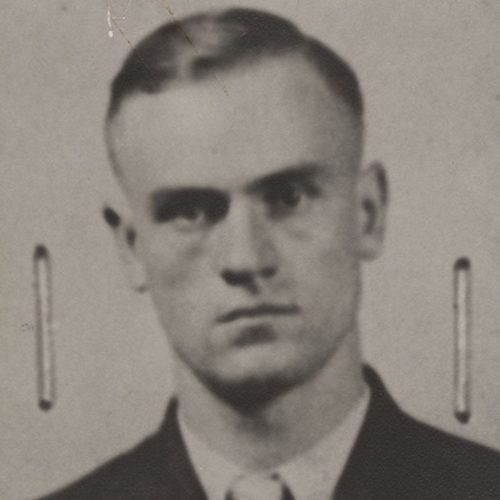
Source: Library and Archives Canada
Living in Ottawa changed his perspective. Gouzenko and his wife experienced freedoms and material comforts they had not known in the Soviet Union. They lived at 511 Somerset Street in Ottawa, Ontario, and became increasingly disillusioned with the Soviet government.
When Gouzenko learned in 1944 that he might be sent back to Moscow, he justifiably feared that his role as a cipher clerk could lead to his internment. Luckily for him, his return was delayed.
September 1945
On September 2, Japan formally surrendered, marking the end of the Second World War.
Three days later, on September 5, Gouzenko left the Soviet Embassy with documents that could expose Soviet espionage in the West. He also decided to defect.
His first attempts to alert Canadian authorities failed. He approached the Department of Justice and tried to speak with journalists at the Ottawa Journal, but he was turned away.
The next night, Soviet agents came looking for him.
Soviet agents break into Gouzenko’s apartment
On September 6, members of the NKVD, the Soviet Union’s secret police and intelligence agency, arrived at Gouzenko’s apartment building.
Gouzenko and his family hid with neighbours while the agents searched for them and the documents.
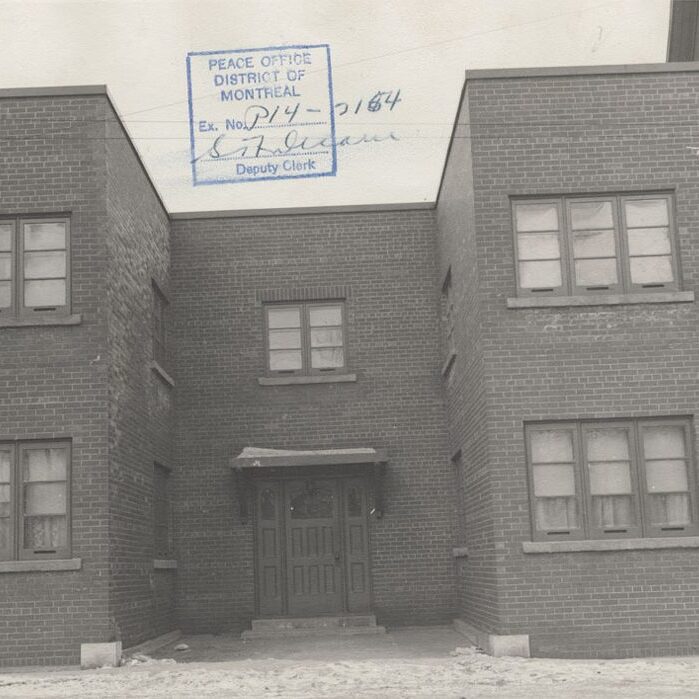
Source: Library and Archives Canada
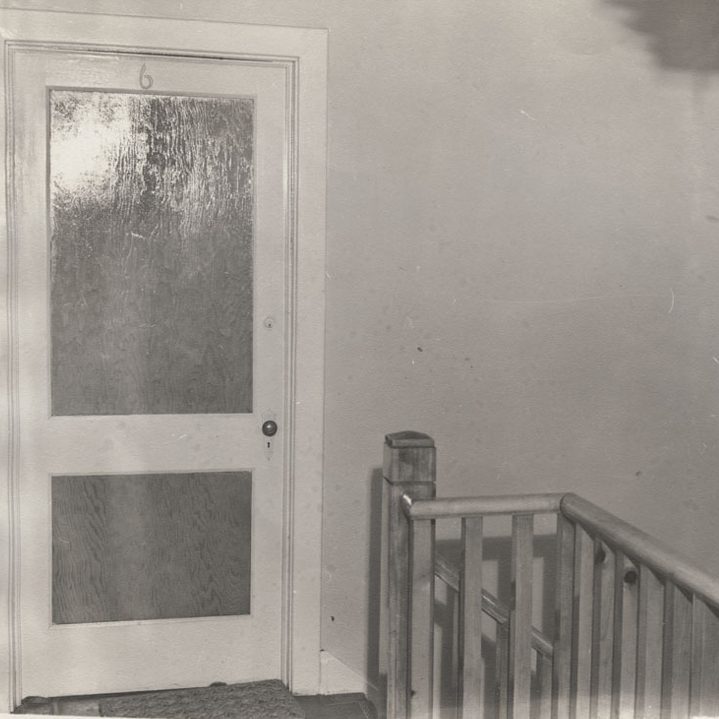
Source: Library and Archives Canada
Ottawa police constables Thomas Walsh and Jock McCulloch were watching the building.
Canadian authorities were now aware of the situation, and the Department of External Affairs and Prime Minister William Lyon Mackenzie King were informed.
On September 7, Gouzenko and his family were placed under RCMP protection. They were eventually moved to Camp X near Oshawa, Ontario, where Canadian authorities questioned Gouzenko about the Soviet spy network.
What the documents revealed
The documents showed that Soviet espionage networks were operating in Canada, the United States, and the United Kingdom. They also revealed Soviet interest in Western atomic research.
The Canadian government, reluctant to fracture the relationship with the Soviet Union, kept the information secret while investigators worked to understand the network of espionage.
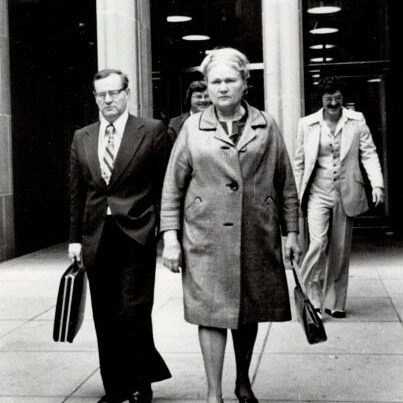
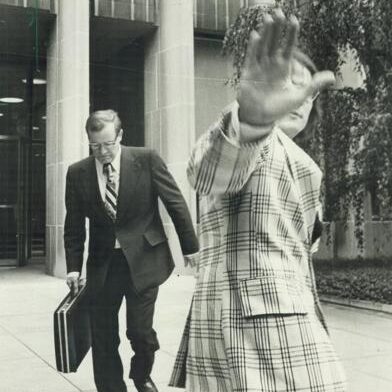
When the information became public in February 1946, the RCMP arrested 39 Canadians, including Member of Parliament Fred Rose and a Canadian Army captain.
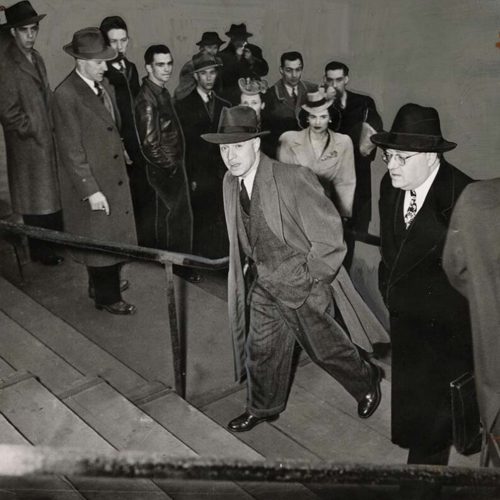
Source: Toronto Star
A Royal Commission was established to investigate Soviet espionage in Canada.
The Commission recognized Gouzenko’s actions, concluding: “In our opinion, Gouzenko, by what he has done, has rendered a great public service to the people of this country and has thereby placed Canada in his debt.”
The start of the Cold War
The Gouzenko Affair changed how Canadians viewed the Soviet Union. Igor Gouzenko’s decision to walk out of the Soviet Embassy with a handful of documents marked the beginning of the Cold War’s first major spy scandal, helping fuel the public distrust of Soviet communism as the wartime alliance gave way to a new rivalry.
Gouzenko and his family were eventually granted Canadian citizenship and lived under assumed names. He later wrote books and became known for appearing in the media wearing a hood to conceal his identity.
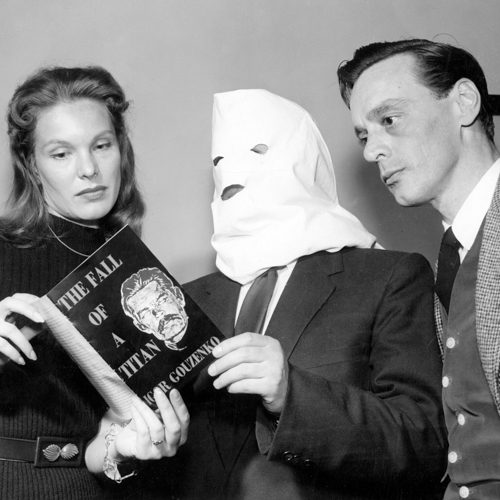
Source: The Canadian Press
Igor Gouzenko died in Mississauga, Ontario, in 1982.
Today, a plaque in Ottawa’s Dundonald Park, across the street from Gouzenko’s former apartment, commemorates the Gouzenko Affair as a national historic event.
Source: Toronto Star
Source: Toronto Star
Resources:
Igor Gouzenko and the Start of the Cold War | Library and Archives Canada Blog