
On Thursday, September 25, we hosted the second event in our 2026 Cold War Speaker Series, Allied Intelligence Networks in the Early Cold War. Dr. Timothy Sayle, Associate Professor of History at the University of Toronto and widely published historian, spoke about the evolution of intelligence for Canada and its allies during the early Cold War, drawing insights from his new book The Next War: Indications Intelligence in the Early Cold War.
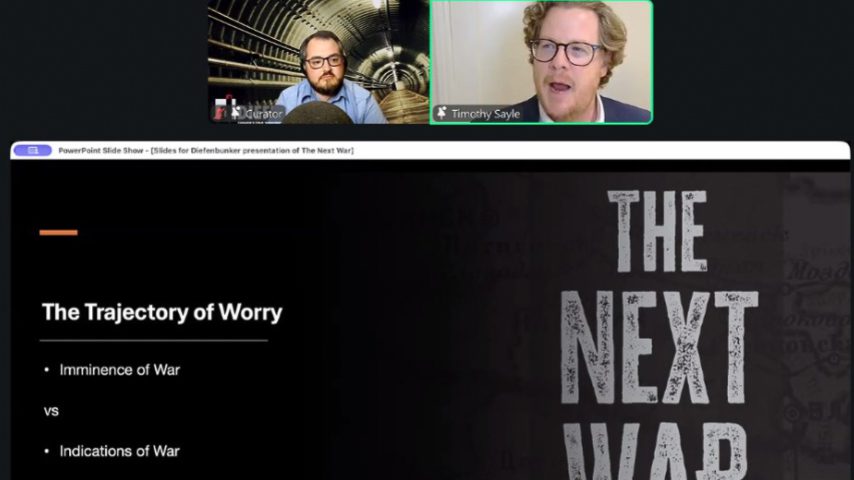
A question of “if” or “when”?
After World War II, Canada initially relied on US intelligence resources and estimates. But given Canada’s geography — physically between the Soviet Union and the United States — and knowing stakes of a nuclear war were high, Canadian intelligence wanted joint assessments and defence plans with the US, instead of simply agreeing to proposed plans. With Canadian involvement, the focus shifted to analyzing Soviet intentions and indications that a war was coming, instead of just looking at Soviet capabilities. Was a general war actually in Soviet interest?
With Canadian intelligence asking “why,” they helped push back on some of the more expensive plans for North America. It became less a question of the imminence of war and when it might break out, but a question of the current risks of war and whether it was likely. The Canadian conclusion was the belief that Soviets wanted to extend their power and influence around the world, but that Soviet leaders knew a war would devastate them after an American retaliation. And so, it was deemed unlikely that the Soviet leaders would choose war.
Canadian influence
Knowing war was less imminent, Allied nations were more concerned about the chance of misjudgement or misunderstanding from the US or the Soviet Union about their opponent, knowing that the power of weapons reduced decision-making time. Allied nations wanted to trust that the US would only use weapons if absolutely necessary, and worried about the US making a mistake.
Canada and the United Kingdom wanted to find a way to insert themselves into any US nuclear decision making, to “inject words of caution” into American deliberations. Negotiating the fact that the US didn’t want their hands tied by their allies, Canada came up with a tactful solution — proposing an intelligence relationship. Under the Tripartite Intelligence Alerts Agreement created in 1957, Canada, the US, and the UK were obligated to share information and their analysis if they had intelligence that war was about to break out. This gave Canada and the UK a chance to share their view of intelligence with the US, with a common goal of information sharing.
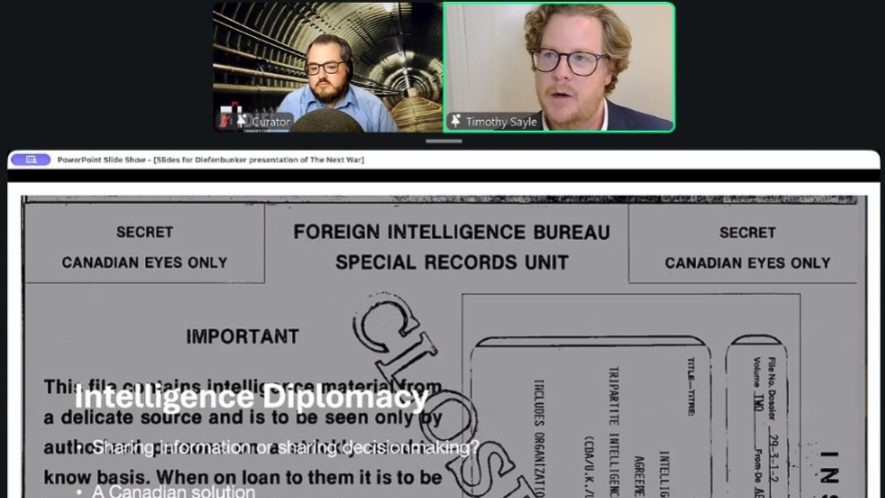
The Agreement led to the creation of a detailed warning network, connecting all three countries via transatlantic cables. It was more than sharing raw intelligence; it demonstrated the importance of also sharing judgements, assessments, and conclusions in intelligence relationships. Through the Agreement, Canada also demonstrated is influence, helping align the Allies on their views on nuclear war and building the relationship between these three countries, while evolving intelligence operations within Canada.
The communication network that was created ultimately led to the existence of the Diefenbunker during the Cold War. As documents from this time period continue to be declassified, we can learn more about the important role Canada played in intelligence. Lessons from the past continue to inform intelligence and strategy today.
Thank you to Dr. Sayle for this informative look into the evolution of Allied intelligence during the early Cold War. You can watch a recording of the virtual lecture here:
Learn more
Through the process of writing The Next War: Indications Intelligence in the Early Cold War, relevant declassified Canadian documents have been made available to the public. You can explore these documents at declassified.library.utoronto.ca .
About the speaker
Dr. Timothy Andrews Sayle is Professor of History at the University of Toronto. He is the author of Enduring Alliance: A History of NATO and the Postwar Global Order (Cornell, 2019) and The Next War: Indications Intelligence in the Early Cold War (UCP, 2025). He has co-edited books on the war in Iraq, Canadian nuclear history, and NATO, and has published two dozen scholarly articles and chapters on the history of national security issues. He created Canada Declassified, an online web repository of recently released archival documents that students and scholars use in their research.
Learn more about the other events in the 2026 Cold War Speaker Series!
October 15: Canadian Intelligence in the Early Cold War