
The Diefenbunker in Ottawa, Ontario is likely Canada’s most widely known Cold War bunker, but it was only one part of a much larger plan.
During the Cold War, the Canadian government developed a Continuity of Government plan to ensure the country could continue to function after a nuclear attack. Rather than relying on a single bunker, officials created a network of protected facilities across Canada that would allow national and provincial governments to continue making decisions, communicating with one another, and coordinating emergency response efforts.
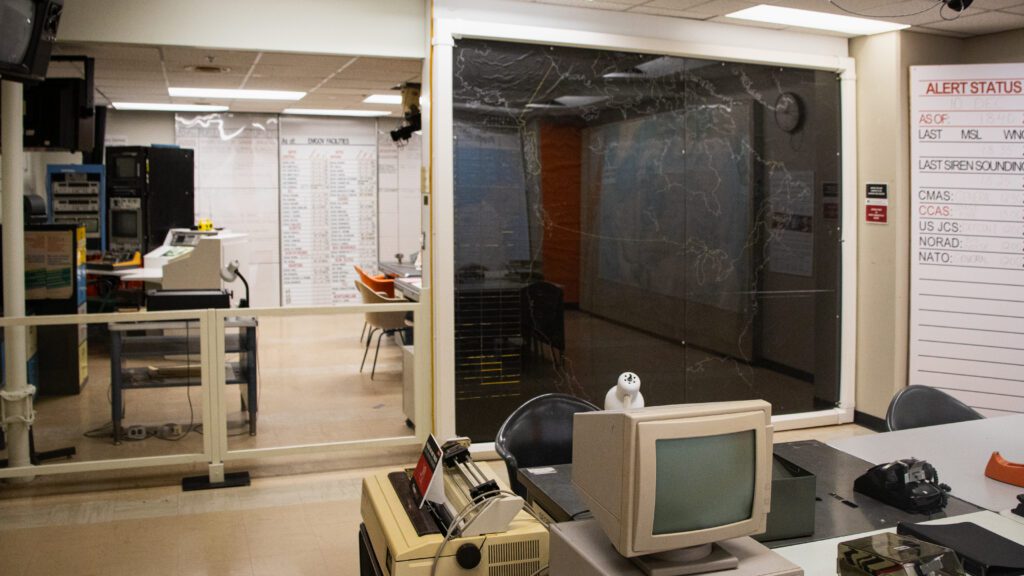
The Central Emergency Government Headquarters
At the heart of this network was the Central Emergency Government Headquarters (CEGHQ) in Canada’s capital — irreverently known as the “Diefenbunker.”
Built between 1959 and 1961, the Diefenbunker was designed to house 535 designated federal leaders, military personnel, emergency planners, and communications staff for a 30-day lockdown period in the event of a national emergency. From here in Ottawa, officials would coordinate Canada’s response during such emergency, or, if the capital became unsafe, they would continue the essential functions of government to help guide the country’s recovery within the network. For 32 years, the site remained ready at any moment for a nuclear attack, while operating as a military communications hub, Canadian Forces Station (CFS) Carp. The site was an active, continuously staffed military station, with approximately 100 military and civilian personnel working around the clock to operate and maintain Canada’s strategic military communications network and keep the facility in a constant state of operational readiness.
Regional Emergency Government Headquarters
The federal government also recognized that communications with Ottawa could be interrupted after an attack. To prepare for that possibility, Regional Emergency Government Headquarters (REGHQs) were built across the country.
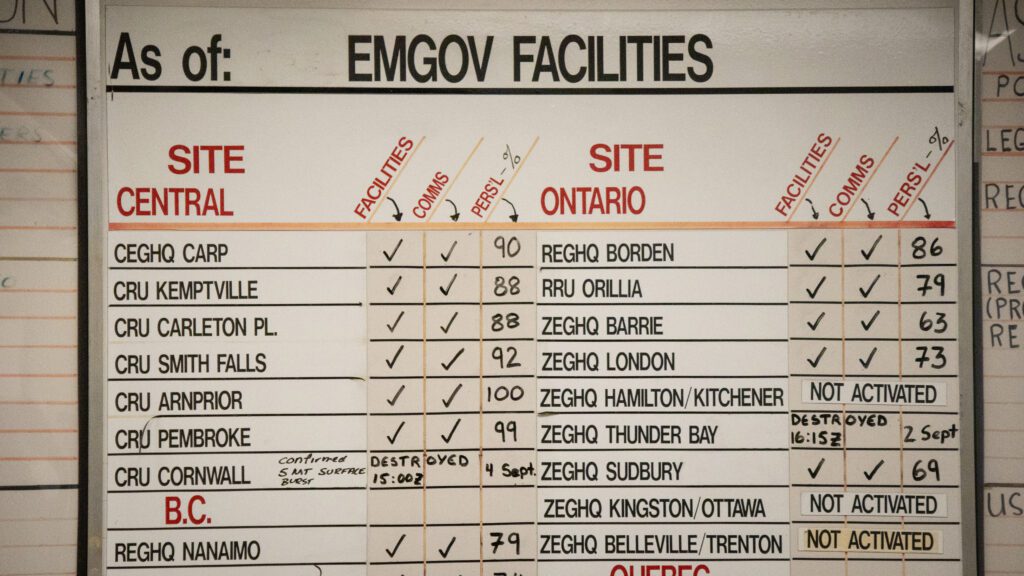
These bunkers would become the centres of government within their provinces, allowing provincial leaders and federal representatives to work together if they became isolated from the national headquarters.
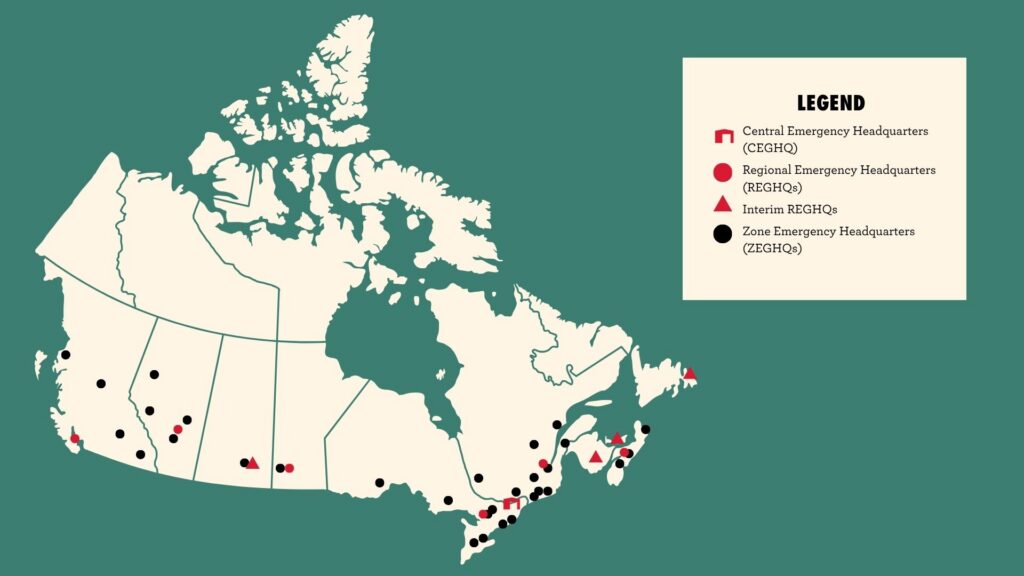
Purpose-built REGHQs were constructed in:
Nanaimo, British Columbia
Penhold, Alberta
Shilo, Manitoba
Borden, Ontario
Valcartier, Quebec
Debert, Nova Scotia
Plans were made for similar hardened facilities in Saskatchewan, New Brunswick, Prince Edward Island, and Newfoundland, but the plans were cancelled due to budgetary changes before they were completed. Instead of hardened bunkers, these provinces had interim headquarters built into provincially-owned infrastructure such as provincial legislature buildings.
Together, the CEGHQ and the REGHQs formed a national network designed to keep the government functioning, even under the most difficult circumstances. Additionally, Zone and Municipal Emergency Government Headquarters (ZEGHQs and MEGQs) were established across the country to serve as the link between REGHQs and local municipalities, coordinating emergency operations and implementing provincial directives at the regional level.
Staying Connected
Communications were essential during this period of potential global crisis. To keep these bunkers connected, a network of transmitter and receiver stations was built alongside the headquarters. One of the most important was the Richardson Detachment near Perth, Ontario, a separate, two-story underground transmitter station that supported the Diefenbunker. Additional receiver sites in nearby towns of Almonte and Dunrobin helped relay messages between the rest of the country and the CEGHQ.
By locating these communications facilities away from the main bunker, the network could continue operating even if one site was damaged and could avoid radio signal interference due to the sites’ high-powered equipment.
What Happened to the Bunker Network?
The bunker network reached full operation by 1962 during the height of the Cold War and before the Cuban Missile Crisis. By the 1990s, international tensions had eased, government priorities had changed, and, following the end of the Cold War, Canada’s emergency government headquarters were decommissioned.
The bunkers across the country have since followed very different paths. Some were sealed and remain on military property, while others were demolished, repurposed, or sold to private owners.
Some have developed fascinating stories of their own. The former Regional Emergency Government Headquarters at Penhold, Alberta, was once linked to a proposed purchase by the Hells Angels Motorcycle Club. The federal government ultimately decided to demolish the bunker in 2001, preventing it from falling into potentially nefarious hands.
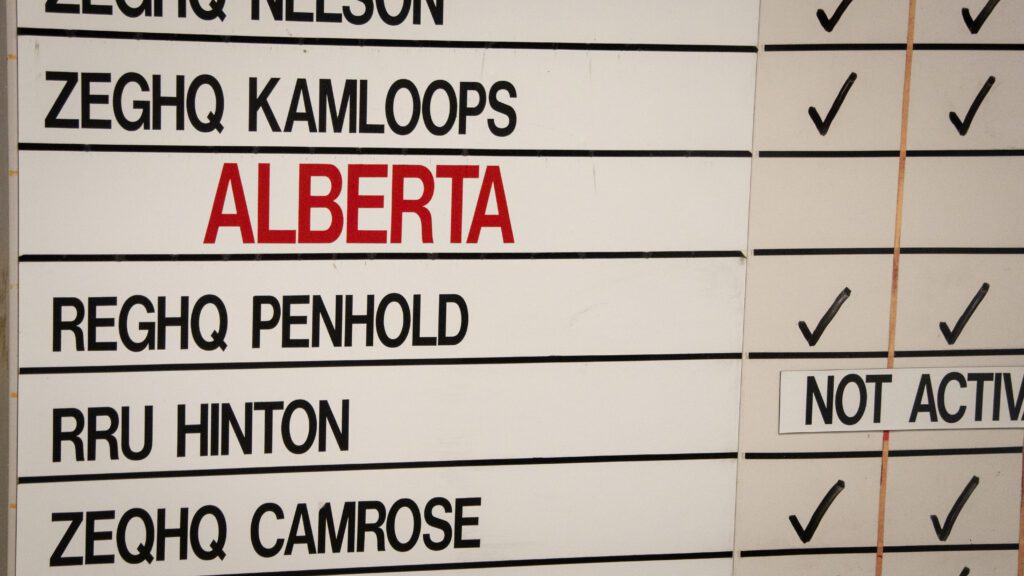
set up in Alberta, including the REQHQ in Penhold, AB. Credit: Diefenbunker: Canada’s Cold War Museum
Others have seen a succession of owners and uses over the years, reflecting the challenges of finding new purposes for these highly specialized Cold War structures. Additionally, with aging infrastructure and advancements in communications and nuclear technology since the construction of the network of bunkers, the ability of the bunkers to continue serving their intended purpose as emergency government fallout shelters is limited. Over time, these structures and the history they represent are fading from public memory.
Canada’s Cold War Museum
The Diefenbunker is now preserving this important Canadian history and increasing understanding of the Cold War for present and future generations. In 1994, CFS Carp was decommissioned. That same year, the CEGHQ, or the Diefenbunker, was designated a national historic site of Canada. This recognition is due to its significance as a surviving Cold War artifact and as a symbol for Canada’s preparedness and extraordinary efforts to safeguard our way of life in the face of a nuclear catastrophe. Today, visitors from around the world can immerse themselves in Cold War history year-round at the Diefenbunker: Canada’s Cold War Museum, through engaging exhibitions, tours, programs, events, and escape rooms.
Resources
View of Beyond the Diefenbunker: Canada’s Forgotten “Little Bunkers” | Material Culture Review